Recently, we successfully developed the first high-efficacy, specific positive allosteric modulator (PAM) for GluN2B-containing N-methyl-D-aspartate receptors (NMDARs). The compound demonstrated the potential to reverse cognitive and behavioral impairments in two distinct mouse models of neuropsychiatric disorders, opening a new pathway for the precise treatment of conditions such as autism spectrum disorder and schizophrenia.
1. Background and Rationale: Targeting the Core Receptor
NMDARs are central to brain functions including learning, memory, and cognition. Dysfunction of the GluN2B subunit has been closely linked to various neuropsychiatric disorders, such as autism and severe neurodevelopmental delays. However, the PAM for GluN2B-NMDAR have remained scarce.
2. Discovery and Characterization of Compound 175
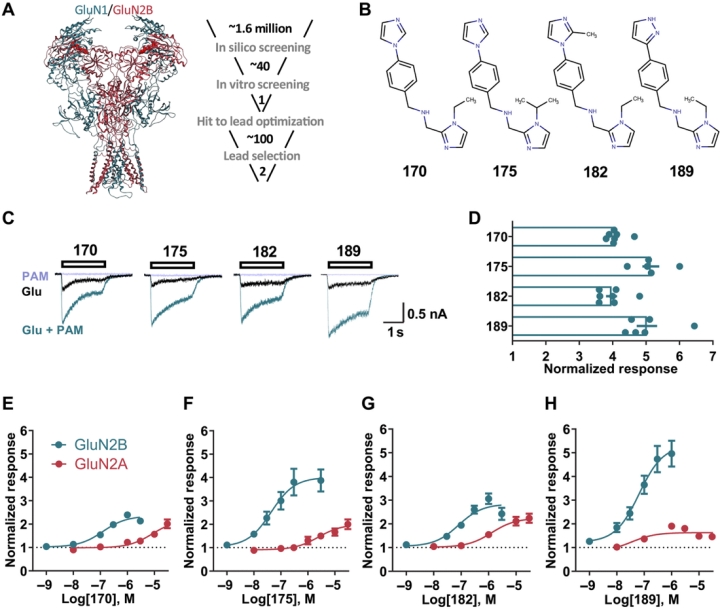
Utilizing computer-aided virtual high-throughput screening of 1.3 million compounds followed by optimization via in vitro cellular assays, the research team identified a lead compound, designated as Compound 175. This compound exhibits high efficiency and selectivity in potentiating the function of NMDARs containing the GluN2B subunit, with minimal effect on other receptor subtypes.
3. Mechanism of Action: Efficacy with Enhanced Safety Profile
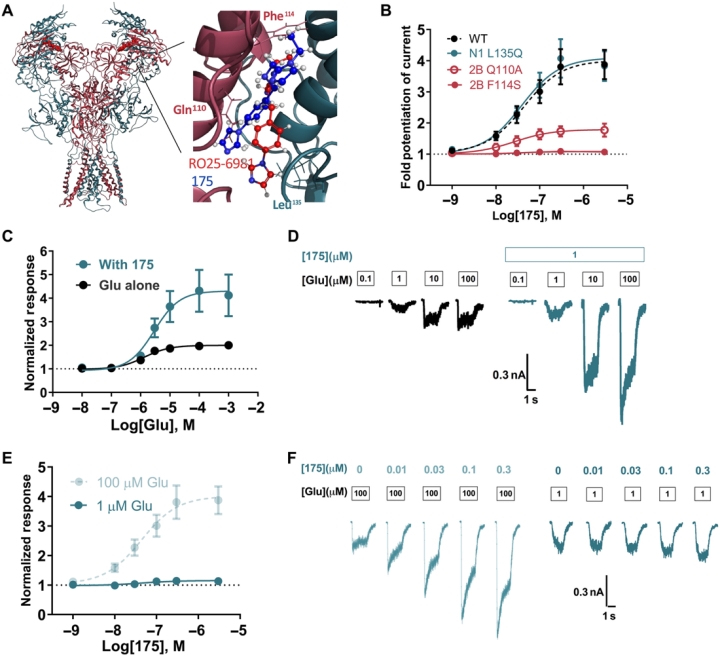
Further investigation revealed that Compound 175 acts by binding to a specific allosteric site on the receptor. Unlike traditional antagonists, it modulates the receptor in a unique "positive" manner. Crucially, it significantly enhances receptor function primarily when synaptic activity leads to elevated glutamate concentrations, while having minimal impact on baseline receptor activity. This activity-dependent mechanism helps mitigate the potential neurotoxicity risk associated with receptor overactivation. Experiments confirmed that Compound 175, at effective concentrations, does not affect neuronal viability and has negligible effects on other major ion channels (e.g., AMPAR, GABAAR), indicating a favorable therapeutic window.
4. Therapeutic Efficacy in Preclinical Disease Models
The therapeutic potential of Compound 175 was validated in two key transgenic mouse models:
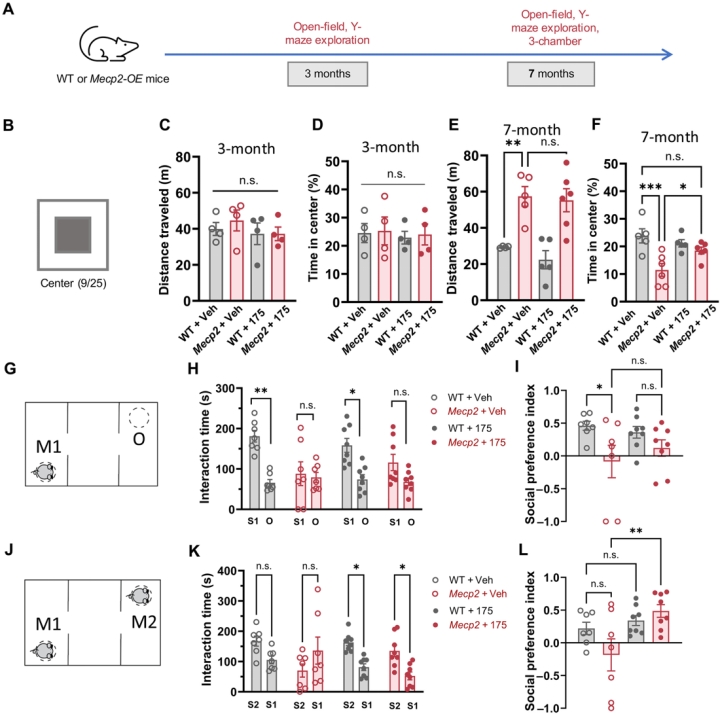
* Mecp2 Overexpression Mice (modeling MECP2 duplication syndrome, an autism-related disorder): These mice exhibit GluN2B hypofunction, anxiety-like behaviors, and social-cognitive deficits. Treatment with Compound 175 significantly reversed their anxiety-like behavior in the elevated plus maze and improved social cognitive ability in the three-chamber social interaction test.
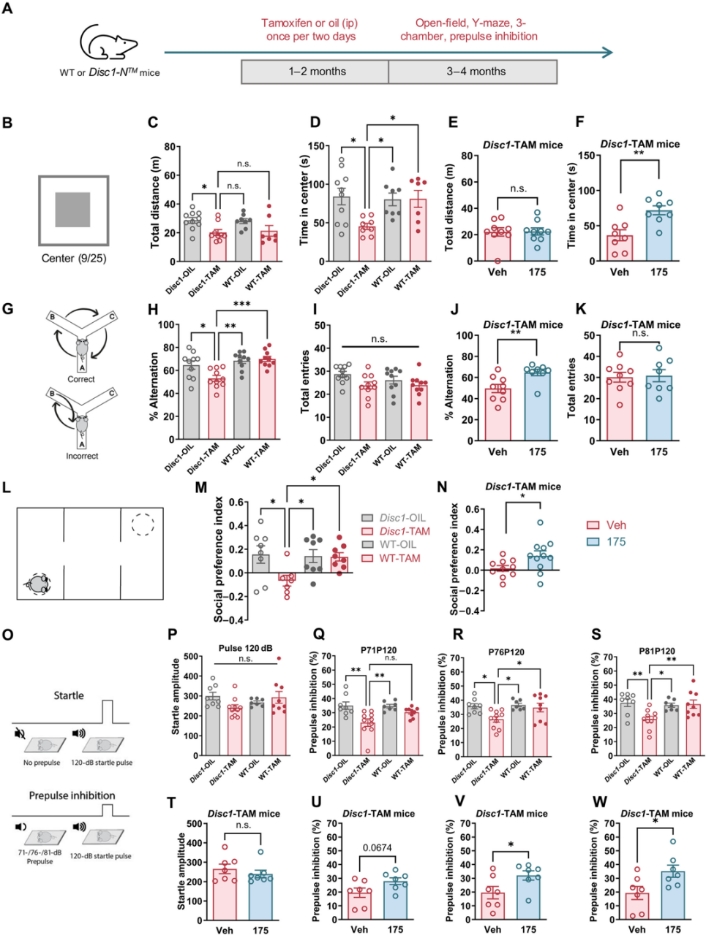
* Disc1 N-terminal Fragment Transgenic Mice (modeling abnormalities associated with schizophrenia): This model exhibits impaired spatial working memory, reduced sociability, and sensorimotor gating deficits (weakened prepulse inhibition). Compound 175 treatment effectively rescued the memory deficits in the Y-maze spontaneous alternation task, increased the social preference index, and significantly improved prepulse inhibition function.
5. Significance and Future Directions
This study reports the first class of highly effective and subtype-selective GluN2B-NMDAR positive allosteric modulators, providing systematic preclinical evidence. Compound 175 not only serves as a powerful research tool for dissecting the precise functions of GluN2B receptors in physiology and pathology but also demonstrates clear translational potential for therapy. Related patents have been filed, laying the foundation for subsequent drug development and clinical translation. The research team plans to further optimize the compound's properties and expand its efficacy validation in additional models of neurological disorders.
Link to original paper: GluN2B-specific NMDAR positive allosteric modulation reverses cognitive and behavioral abnormalities in Mecp2 and Disc1 transgenic mice | Science Advances






 浏览量:
浏览量:
 TOP
TOP