


Xin Wang
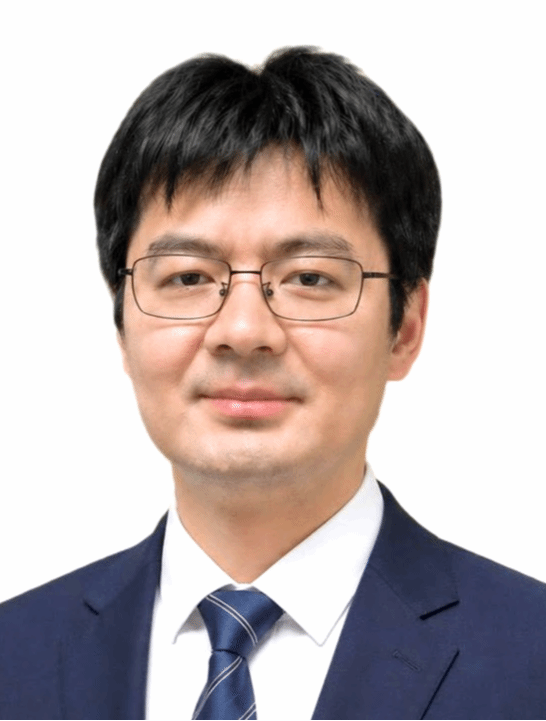
Xin Wang
Distinguished professor
Dr. Xin Wang is a Distinguished Professor at Fudan University. He received the National High-Level Talent Program and is a SANS Scholar (Early Career) of the Shanghai Institute for Advanced Natural Sciences (SANS).
Research Overview
The laboratory studies how the peripheral immune system interacts with the central nervous system (CNS) in neurodegenerative diseases. The group combines human clinical samples with multiple animal models of disease and takes a systematic, multidisciplinary approach. Its goal is to understand how peripheral–CNS neuroimmune crosstalk drives disease onset and progression, and to define the underlying molecular mechanisms. Building on these findings, the group identifies and validates new therapeutic targets and conducts proof-of-concept studies of candidate drugs, with the aim of developing innovative treatment strategies for neurodegenerative diseases.
The group's recent work has been published in leading international journals, including Cell, Nature Neuroscience, Nature Medicine, Journal of Clinical Investigation, Science Advances, National Science Review, Molecular Psychiatry, and PLoS Biology.
Major Research Grants
1. Regional Innovation and Development Joint Fund, National Natural Science Foundation of China (NSFC)
Grant No. U25A2055 | 2026–2029 | Principal Investigator
2. Excellence Research Group Program (formerly the Basic Science Center Program), NSFC
Grant No. 82588301 | 2026–2030 | Core Investigator
3. National Science Fund for Distinguished Young Scholars, NSFC
Grant No. 82325018 | 2024–2028 | Principal Investigator
4. Regional Innovation and Development Joint Fund, NSFC
Grant No. U21A20358 | 2022–2025 | Principal Investigator
5. Subproject, National Key Research and Development Program of China, Ministry of Science and Technology (MOST)
Grant No. 2021YFA1101401 | 2021–2026 | Subproject Leader
Awards and Honors
1. First Prize, Xiamen Natural Science Award, 2025
2. First Prize, Fujian Medical Science and Technology Award, 2024
3. Recipient, 17th Youth Science and Technology Award of Fujian Province, 2023
4. First Prize, Xiamen Science and Technology Progress Award, 2018
5. Selected for the inaugural cohort of the Xiamen Outstanding Young Talent Program, 2018
6. Selected for the Fujian High-Level Innovative Talent Recruitment Program, 2017
7. Minjiang Scholar Distinguished Professor, 2016
8. Selected for the National High-Level Young Talent Program, 2016
9. Young Scholar Award, Alzheimer’s Association (USA), 2010
- Research Directions
- Personnel
- Paper
- Employment
- Contact us
Current Research Directions
1. Mechanisms of disease: Uncovering the molecular and cellular mechanisms by which dysregulated peripheral–central immune interactions contribute to the pathogenesis of neurodegenerative diseases.
2. Target discovery and drug development: Identifying novel drug targets within peripheral–central immune pathways, conducting efficient drug screening for neurodegenerative diseases, and investigating the mechanisms of action of targeted therapeutics.
-
Gao Y, Hong Y, Huang L, Zheng S, Zhang H, Wang S, Yao Y, Zhao Y, Zhu L, Xu Q, Chai X, Zeng Y, Zeng Y, Zheng L, Zhou Y, Luo H, Zhang X, Zhang H, Zhou Y, Fu G, Sun H, Huang TY, Zheng Q, Xu H, Wang X*. β2-microglobulin functions as an endogenous NMDAR antagonist to impair synaptic function. Cell. 2023;186(5):1026-1038.
-
Zhao Y, Zheng Q, Hong Y, Gao Y, Hu J, Lang M, Zhang H, Zhou Y, Luo H, Zhang X, Sun H, Yan XX, Huang TY, Wang YJ, Xu H, Liu C, Wang X*. β2-microglobulin coaggregates with Aβ and contributes to amyloid pathology and cognitive deficits in Alzheimer's disease model mice. Nat Neurosci. 2023;26(7):1170-1184.(封面论文)
-
Zhang H#, Zheng Q#, Guo T#, Zhang S#, Zheng S, Wang R, Deng Q, Yang G, Zhang S, Tang L, Qi Q, Zhu L, Zhang X-F, Luo H, Zhang X, Sun H, Gao Y, Zhang H, Zhou Y, Han A, Zhang C-S, Xu H, Wang X*. Metabolic reprogramming in astrocytes results in neuronal dysfunction in intellectual disability. Mol Psychiatry. 2022. DOI: 10.1038/s41380-022-01521-x.
-
Zheng Q#, Song B#, Li G#, Cai F#, Wu M, Zhao Y, Jiang L, Guo T, Shen M, Hou H, Zhou Y, Zhao Y, Di A, Zhang L, Zeng F, Zhang X-F, Luo H, Zhang X, Zhang H, Zeng Z, Huang T, Dong C, Qing H, Zhang Y, Zhang Q, Wang X, Wu Y, Xu H*, Song W*, and Wang X*. USP25 inhibition ameliorates Alzheimer’s pathology through regulating APP processing and Aβ generation. J Clin Invest. 2022;132(5): e15217
-
Zhang H#, Hong Y#, Yang W, Wang R, Yao T, Wang J, Liu K, Yuan H, Xu C, Zhou Y, Li G, Zhang L, Luo H, Zhang X, Du D, Sun H, Zheng Q, Zhang Y-W, Zhao Y, Zhou Y, Xu H, Wang X*. SNX14 deficiency-induced defective axonal mitochondrial transport in Purkinje cells underlies cerebellar ataxia and can be reversed by valproate. Natl Sci Rev. 2021;8(7): nwab024.
-
Zheng Q#, Li G#, Wang S, Zhou Y, Liu K, Gao Y, Zhou Y, Zheng L, Zhu L, Deng Q, Wu M, Di A, Zhang L, Zhao Y, Zhang H, Sun H, Dong C, Xu H, Wang X*. Trisomy 21-induced dysregulation of microglial homeostasis in Alzheimer's brains is mediated by USP25. Sci Adv. 2021;7(1): eabe1340.
-
Zeng F#, Ma X#, Zhu L#, Xu Q, Zeng Y, Gao Y, Li G, Guo T, Zhang H, Tang X, Wang Z, Ye Z, Zheng L, Zhang H, Zheng Q, Li K, Lu J, Qi X, Luo H, Zhang X, Wang Z, Zhou Y, Yao Y, Ke R, Zhou Y, Liu Y, Sun H, Huang T, Shao Z, Xu H, and Wang X*. The deubiquitinase USP6 affects memory and synaptic plasticity through modulating NMDA receptor stability. PLoS Biol. 2019;17(12): e3000525.
-
Wang X, Zhao Y, Zhang X, Badie H, Zhou Y, Mu Y, Loo LS, Cai L, Thompson RC, Yang B, Chen Y, Johnson PF, Wu C, Bu G, Mobley WC, Zhang D, Gage FH, Ranscht B, Zhang YW, Lipton SA, Hong W, Xu H*. Loss of sorting nexin 27 contributes to excitatory synaptic dysfunction via modulation of glutamate receptor recycling in Down's syndrome. Nat Med. 2013;19(4):473-80. (封面论文)
Address: Floor 8, Building 3 for Scientific Research, 826 Zhangheng Road
Postcode: 201203
Email: xinwang_xw@fudan.edu.cn


Address: Building 3 for Scientific Research, 826 Zhangheng Road

Postcode: 201203

复旦大学公众号
Address: Building 3 for Scientific Research, 826 Zhangheng Road Postcode: 201203,Fudan SANS Neuroscience Center 版权所有
 浏览量:
 TOP