


Faculty
Yutian Wang
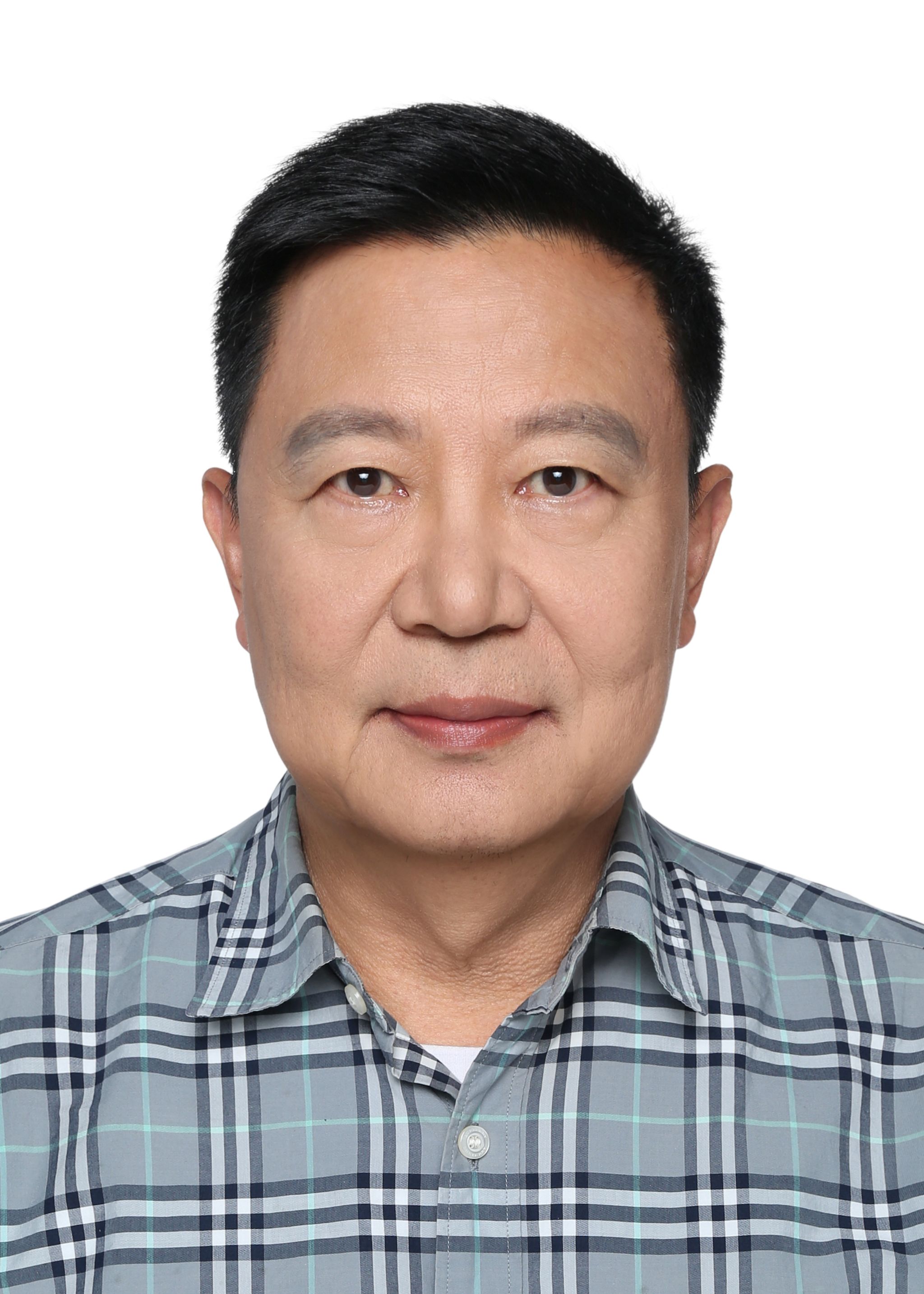
Yutian Wang
Fellow of the Royal Society of Canada
Yu Tian Wang is a Fellow of the Royal Society of Canada, a Distinguished Professor at Fudan University, a SANS (Shanghai Academy of Natural Sciences) Senior Scholar and the Director of the Fudan Shangsi Center for Neuroscience. He earned his B.Med. and Master's degrees from Shandong University Medical School in 1982 and 1985, and his Ph.D. from Memorial University of Newfoundland, Canada, in 1992. From 1992 to 2001, he held positions as a Postdoctoral Fellow, Assistant Professor, and Associate Professor in Faculty of Medicine at the University of Toronto. Subsequently, until 2020, he served as a Tenured Professor and the BC & Y Stroke Research Chair in the Department of Medicine at the University of British Columbia (UBC), Canada. Upon returning to China, he held the position of Chair Professor and the inaugural Dean at the School of Life and Health Sciences, Shenzhen University of Advanced Technology. He joined Fudan University in July 2025.
His research primarily focuses on the mechanisms underlying the generation and modulation of synaptic transmission and plasticity, particularly the molecular mechanisms of regulating postsynaptic neurotransmitter receptor trafficking, dynamic surface expression, and their crucial roles in the brain function and pathogenesis and progression of major neurological disorders, as well as the development of novel therapeutics. He was the first to report that the NMDA type glutamate receptor is functionally regulated by tyrosine phosphorylation. He pioneered the discovery that the rapid trafficking of GABAA and AMPA receptors to and from the postsynaptic synaptic membrane surface is a critical and effective mechanism of regulating synaptic efficacy, thereby revealing a new set of mechanisms regulating synaptic plasticity. By developing peptide inhibitors that block receptor trafficking, he further elucidated the mechanisms of synaptic plasticity and its role in learning and memory. He clarified the differential mediation of synaptic plasticity and neuronal survival/death by distinct GluN2A and GluN2B subunit-containing NMDA receptors, and has thereby developed several novel therapeutics targeting these subunit-specific NMDAR signaling pathways.
Over the years, he has published more than 180 articles in the field of medical neuroscience, with a Google Scholar citation count exceeding 45,000 and an h-index of 78. Many of these publications have appeared in prestigious scientific journals, including Science, Nature, Cell, Neuron, Nature Neuroscience, Nature Medicine, Nature Genetics, Nature Communications, and PNAS.
He has received numerous accolades from the Canadian federal and provincial governments. Since 2001, he has held a Heart and Stroke Foundation of Canada Research Chair at UBC. He was a Howard Hughes Medical Institute (HHMI) International Research Scholar in 2002 and 2006. In 2006, he was inducted into the Royal Society of Canada (Academy of Sciences).
Other Honors and Awards:
• Innovation Award, Canadian College of Neuropsychopharmacology
• Killam Professor, University of British Columbia
• Distinguished University Scholar, University of British Columbia
• UBC Killam Research Prize
• Annual Distinguished Physiologist Award, Canadian Physiological Society
• VHHSC Martin Hoffman Excellence in Research Award, UBC
• Senior Scholar, Michael Smith Foundation for Health Research
• Premier's Excellence Research Award, Government of Ontario
• CIHR Investigator Award
• EJLB Foundation Scholar Award
• MacDonald Scholar Award (awarded to the highest-rated HSFC Research Scholar annually)
• Medical Research Council of Canada Studentship
• Research Fellowship, Heart and Stroke Foundation of Canada
• Fellowship, Medical Research Council of Canada
- Research Directions
- Personnel
- Paper
- Employment
- Contact us
To investigate the mechanisms underlying the generation and processing of information in the mammalian central nervous system, with specific focuses on:
1) Elucidating the molecular mechanisms regulating synaptic transmission and plasticity;
2) Investigating the role of alterations in these mechanisms in neural development, and the formation, consolidation, and regression of neural circuit connectivity;
3) Exploring their contributions to the pathogenesis and progression of major brain disorders;
4) Facilitating the translation of mechanistic insights into clinical applications by developing novel diagnostic and therapeutic strategies for brain disorders including memory impairments, stroke, Parkinson's and Alzheimer's diseases.
-
Xin Yang, Junior Co-Principal Investigator
Email: sj12350@126.com
Research Direction: Mesoscale functional imaging and targeted degradation of endogenous proteins
-
Wenlin Chen, Assistant Researcher
Email: chenwenlin1991@gmail.com
Research Direction: Development of allosteric modulators targeting NMDA receptors; NMDA receptor- and GABAA receptor-related channelopathies
-
Tianrui Zhang, Assistant Researcher
Email: tr.zhang@siat.ac.cn
Research Direction: protein degradation, in-vitro and in-vivo modeling of neurodegenerative disorders
-

Bolong Li, Ph.D. Student
Email: libolong25@m.fudan.edu.cn
Research Direction:
-

Ziang Li, Ph.D. Student
Email: zali25@m.fudan.edu.cn
Research Direction: Pathogenesis and Pharmacological Intervention of Parkinson's Disease
-

Mingli Lu, Ph.D. Student
Email: 25111530017@m.fudan.edu.cn
Research Direction: Pathogenesis and Pharmacological Intervention of Parkinson's Disease
-
Zhang, Z., Le, G. N., Ge, Y., Tang, X., Chen, X., Ejim, L., Bordeleau, E., Wright, G. D., Burns, D. C., Tran, S., Axerio-Cilies, P.*, Wang, Y. T.*, Dong, M.*, & Woolley, G. A. * 2023. Isomerization of bioactive acylhydrazones triggered by light or thiols. Nature Chemistry, 2023, 15:1285-1295.
-
Ma, T., Wang, L., Chai, A., Liu, C., Cui, W., Yuan, S., Wing Ngor Au, S., Sun, L., Zhang, X., Zhang, Z., Lu, J., Gao, Y., Wang, P., Li, Z., Liang, Y., Vogel, H.*, Wang, Y. T.*, Wang, D.*, Yan, K.*, & Zhang, H.* Cryo-EM structures of CLC-2 chloride channel reveal the blocking mechanism of its specific inhibitor AK-42. Nature Communications, 2023, 14(1).
-
Wen, Y., Dong, Z., Liu, J., Axerio-Cilies, P., Du, Y., Li, J., Chen, L., Zhang, L., Liu, L., Lu, J., Zhou, N., Chuan Wu, D. *, & Yu Tian Wang*. Glutamate and GABAA receptor crosstalk mediates homeostatic regulation of neuronal excitation in the Mammalian Brain. Signal Transduction and Targeted Therapy, 2022, 7(1).
-
Donovan M. Ashby, Stan B. Floresco, Anthony G. Phillips, Alexander McGirr, Jeremy K. Seamans, and Yu Tian Wang*. LTD is involved in the formation and maintenance of rat hippocampal CA1 place-cell fields. Nature Communications. 2021, 12:100.
-
Xuelai Fan#, Wu Yang Jin#, Jie Lu, Jin Wang, Yu Tian Wang*. Rapid and reversible knockdown of endogenous proteins by peptide-directed lysosomal degradation. Nature Neuroscience. 2014, 17:471-80.
-
Jun Liu, Dong Chuan Wu, Yu Tian Wang*. Allosteric potentiation of glycine receptor chloride currents by glutamate. Nature Neuroscience. 2010, 13:1225-32.
-
Changiz Taghibiglou#, Henry G S Martin#, Ted Weita Lai, Taesup Cho, Shiv Prasad, Luba Kojic, Jie Lu, Yitao Liu, Edmund Lo, Shu Zhang, Julia Z Z Wu, Yu Ping Li, Yan Hua Wen, Joon-Hyuk Imm, Max S Cynader, Yu Tian Wang*. Role of NMDA receptor-dependent activation of SREBP1 in excitotoxic and ischemic neuronal injuries. Nature Medicine. 2009, 15:1399-1406.
-
Karen Brebner#, Tak Pan Wong#, Lidong Liu, Yitao Liu, Paul Campsall, Sarah Gray, Lindsay Phelps, Anthony G. Phillips*, Yu Tian Wang*. Nucleus Accumbens Long-Term Depression and the Expression of Behavioral Sensitization. Science. 2005, 310:1340-3.
-
Lidong Liu#, Tak Pan Wong#, Mario F. Pozza, Kurt Lingenhoehl, Yushan Wang, Morgan Sheng,Yves P. Auberson, Yu Tian Wang*. Role of NMDA Receptor Subtypes in Governing the Direction of Hippocampal Synaptic Plasticity. Science. 2004, 304:1021-4.
-
Yi Nong#, Yue-Qiao Huang#, William Ju#, Lorraine V. Kalia, Gholamreza Ahmadian, Yu Tian Wang* & Michael W. Salter*. Glycine binding primes NMDA receptor internalization. Nature. 2003, 422:302-7.
-
Fang Liu, Qi Wan, Zdenek B. Pristupa, Xian-Min Yu, Yu Tian Wang*& Hyman B. Niznik*. Direct protein-protein coupling enables cross-talk between dopamine D5 and gamma-aminobutyric acid A receptors. Nature. 2000, 403:274-80.
-
Qi Wan#, Z. G. Xiong, Heng YeMan, C. A. Ackerley, J.L Braunton, Wei YangLu, Laurence E.Becker, John F. MacDonald, Yu Tian Wang*. Recruitment of functional GABA(A) receptors to postsynaptic domains by insulin. Nature. 1997, 388:686-90.
-
Yu Tian Wang, Michael W. Salter*. Regulation of NMDA receptors by tyrosine kinases and phosphatases. Nature. 1994, 369:233-5.
Address: Floor 8, Building 3 for Scientific Research, 826 Zhangheng Road
Postcode: 201203
Email: wangyutian@fudan.edu.cn

-

Address: Building 3 for Scientific Research, 826 Zhangheng Road
-

Postcode: 201203

复旦大学公众号
Address: Building 3 for Scientific Research, 826 Zhangheng Road Postcode: 201203,Fudan SANS Neuroscience Center 版权所有
 浏览量:
浏览量:
 TOP
TOP